
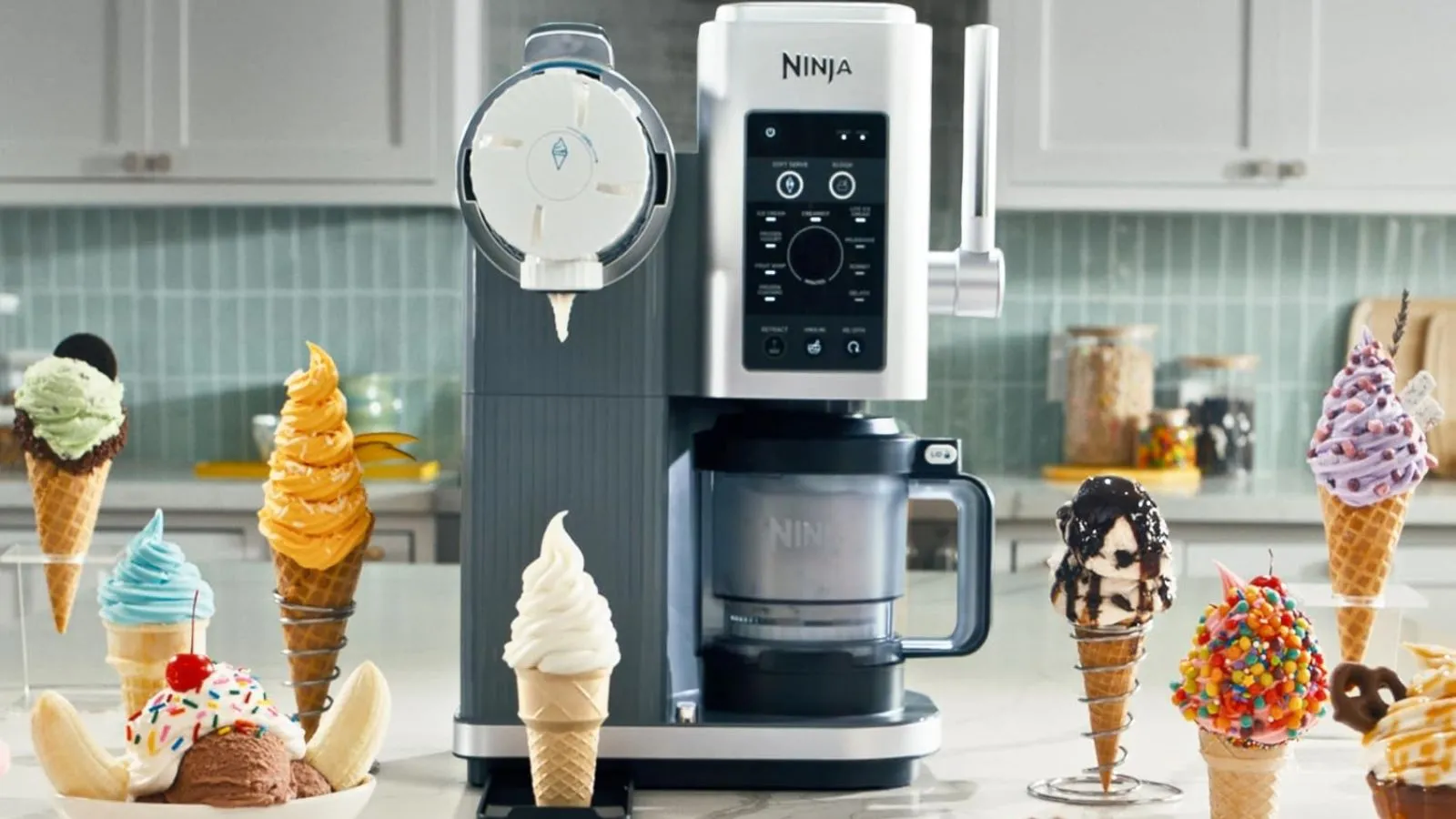
A kitchen appliance does not become a summer obsession because it makes one decent bowl of vanilla. The Ninja CREAMi caught fire because it turned a freezer pint into a low-risk experiment: protein powder one day, mango sorbet the next, cookies folded in after dinner. That is the real reason this viral ice cream maker keeps showing up in American kitchens, dorm rooms, family TikToks, and Prime Day wish lists. The machine promises control over ingredients, quick processing after freezing, and the kind of repeatable fun that makes people post results instead of leaving it in a cabinet. The official product page lists programs for ice cream, gelato, sorbet, milkshakes, smoothie bowls, lite ice cream, and mix-ins, while recent appliance testing still describes the process as a 24-hour freeze followed by fast processing in minutes. For readers tracking consumer products through retail trend coverage, the story is less about dessert and more about how social proof can move a small appliance from curiosity to household routine.
Why the Ninja CREAMi Took Off Beyond a Passing TikTok Moment
The first wave of attention looked like a simple social media loop: someone blends a frozen pint, the texture turns soft and scoopable, and comments fill with recipe requests. The deeper story is stronger. This appliance solved a small daily tension for Americans who want treats but also want control. Grocery-store ice cream is easy, yet it gives you little say over sugar, protein, dairy, mix-ins, or portion size. A machine that turns your own base into homemade frozen desserts gives people a sense of choice without asking them to become pastry chefs. That matters in a country where one household may include a keto dieter, a picky child, a dairy-sensitive adult, and someone who wants a full candy-bar dessert after dinner.
The machine makes dessert feel like a small project
A standard ice cream maker asks you to think like a cook. You chill a bowl, prepare a base, churn it, wait, clean up, and hope the texture holds. This newer style flips the order. You freeze the pint first, then process it when you want to eat. That sounds like a small shift, but it changes the mood of the whole process. The task becomes closer to meal prep than baking, which is why it fits weeknight life.
That is why the videos work. The reveal happens at the exact moment the machine finishes. You see a frozen block become something spoonable. No one needs to explain overrun, stabilizers, or dairy ratios for the moment to make sense. The visual sells the idea faster than a product box ever could. A camera can capture the before and after in one tight shot, and the viewer understands the promise before the caption ends.
There is also a quiet family angle here. A parent in Ohio can make strawberry yogurt pints for a child, a college student in Arizona can prep a budget chocolate shake base, and a runner in Colorado can freeze a post-workout pint with fruit and milk. Same machine, different reason. That flexibility helps homemade frozen desserts feel less like a weekend hobby and more like a normal part of the freezer. A second pint container can hold tomorrow’s flavor, which turns a single appliance into a small dessert system.
Why protein ice cream recipes changed the buyer math
The non-obvious driver behind the sales surge is not plain ice cream. It is protein. Protein ice cream recipes gave the machine a second identity beyond dessert, and that matters. People who might never buy a traditional ice cream maker can justify a machine that turns a shake, yogurt, or low-sugar base into something that feels closer to a treat. The purchase moves from “extra gadget” to “daily routine helper,” which is a much stronger mental category.
That shift expanded the buyer pool. Fitness creators started showing pints made from protein shakes. Parents tested Greek yogurt and fruit. People managing calories used pudding mix, fairlife-style milk, or cottage cheese blends. Some recipes are better than others, but the pattern is clear: the appliance became part of a daily routine, not a once-a-month indulgence. The same person who would skip a bowl of ice cream on Tuesday may be happy to eat a chocolate protein pint after the gym.
This is where the viral ice cream maker label understates the trend. The strongest content is not “look at my dessert.” It is “look what I can make from what I already buy.” That is the difference between a novelty and a sales engine. When your grocery cart already includes milk, bananas, berries, yogurt, and protein powder, the extra purchase feels easier to defend. The smartest videos sell permission as much as flavor: yes, you can have something cold, sweet, and personal without buying a premium pint every time.
The Sales Surge Makes More Sense When You Follow the Kitchen Counter
A sales jump for a kitchen appliance often comes from one of two places: a gift season or a single flashy feature. This trend has both, yet the counter tells a better story. The appliance takes up visible space. When people give it that space, they expect repeat use. SharkNinja has reported strong broader growth, including first-quarter 2026 net sales up 15.6% to $1.41 billion and full-year 2025 net sales up 15.7% to about $6.40 billion. Those company-level numbers do not prove exact unit sales for one product, but they do show a brand riding strong demand while the Creami line keeps earning attention. In retail, that distinction matters. A viral clip may start the search, but repeat kitchen behavior supports the shelf space.
Social proof beat traditional appliance marketing
Old appliance marketing leaned on polished kitchens, neat families, and clean feature lists. This trend grew in a messier way. A spoonful looked too icy. Someone hit re-spin. The next clip showed a better texture. A peanut butter cup got added at the end. A comment asked for macros. Then someone else tried the same pint with oat milk. The comment section became a recipe lab, a troubleshooting desk, and a shopping nudge all at once.
That is a stronger sales path than a perfect ad because it shows failure and recovery. Viewers see that the machine may need a splash of milk, a second spin, or a better base. Oddly, those flaws help. They make the appliance feel learnable rather than magical, and learnable products build communities. A flawless ad asks you to trust a brand. A messy creator clip lets you trust the process.
For site owners covering consumer behavior, this pattern fits well beside a small kitchen appliance buying guide. Buyers are not asking only, “Does it work?” They ask, “Will I keep using it after the first week?” Social proof answers that question through repetition. When hundreds of people show breakfast pints, late-night pints, and kid-friendly pints, the machine starts to look less risky. The public proof is not one expert verdict; it is a crowd showing the same habit from different kitchens.
The price feels easier to defend when pints become repeatable
A countertop appliance has to survive a private argument. You may want it, but you still ask where it will live, how often you will wash it, and whether it will become another expensive object behind the blender. The Creami trend wins that argument by making pints repeatable. You can prep several containers, freeze them flat, and choose one later. That gives the purchase a rhythm, and rhythm is what keeps gadgets from becoming clutter.
Recent testing also helps explain why the machine holds interest. Good Housekeeping testers found creamy, scoopable results after processing, while also pointing out real drawbacks such as loud operation and uneven mix-in distribution at times. That balance is useful because shoppers trust a product more when the limits are named. A review that admits the noise prepares the buyer for the tradeoff. The machine sounds like work because it is shaving through a frozen pint.
The bigger insight is that the appliance sells time-shifted pleasure. You do the thinking yesterday and get the reward tonight. That works for busy U.S. households because dinner already burns enough attention. A freezer pint that becomes dessert in minutes feels like a small win at 8:45 p.m., especially when everyone wants a different flavor. It also helps control waste. Half a banana, a cup of berries, or the last bit of chocolate milk can become tomorrow’s pint instead of drifting to the back of the fridge.
What Buyers Should Know Before They Join the Creami Rush
Hype can make any product look easier than it is. This one has a learning curve, and buyers should know that before they clear counter space. The official feature list is broad, but the best results still depend on base texture, freezer time, fill level, and patience. That does not make the machine hard. It makes it different from a blender, and that difference is where some bad reviews come from. A blender breaks down soft or liquid ingredients. This appliance starts with a hard frozen block, so the recipe has to be built for that kind of pressure.
The 24-hour freeze changes how you use it
The biggest catch is planning. You do not pour in milk, press a button, and eat fresh ice cream ten minutes later. You freeze the base first. Appliance reviewers continue to flag that 24-hour freeze as part of the normal process, even when they praise the final texture. This matters because the machine rewards people who think one day ahead. It may disappoint people who shop by craving alone.
That sounds inconvenient until you treat the freezer like a flavor queue. One pint can be chocolate peanut butter. One can be pineapple sorbet. One can be vanilla yogurt for toppings. You are not making dessert from scratch each night; you are choosing from work already done. The catch is freezer space. In a small apartment freezer, three pints can crowd out frozen vegetables, meat, or meal prep containers.
Food safety deserves a place in that routine too. Homemade recipes online can drift into raw eggs, leftover dairy, or mystery leftovers in the name of “hacks.” For egg-based bases, the FDA’s guidance on homemade ice cream and raw eggs recommends pasteurized egg products or other safer substitutes when a recipe would otherwise use raw eggs. That advice is not trendy, but it protects the fun. A dessert machine should not turn a family treat into a food-safety gamble.
Texture rewards patience more than fancy ingredients
Many disappointed first tries come from expecting the machine to fix any frozen mixture. It cannot turn every icy block into premium gelato. A base with enough solids, fat, sugar, fruit fiber, or dairy protein tends to behave better than thin liquid. This is why a canned pineapple sorbet can work well, while a watery fruit blend may need re-spinning or a splash of liquid. Texture is chemistry, even when the recipe looks casual.
The counterintuitive move is to keep recipes boring at first. A simple chocolate milk base teaches you more than a seven-ingredient brownie batter pint. Once you understand how the machine responds, you can push it. That is when mix-ins, cookie pieces, cereal, espresso powder, and nut butters become fun instead of frustrating. A plain base is not a lack of creativity. It is practice.
Protein ice cream recipes need the same restraint. Too much powder can taste chalky. Too little fat can freeze hard. A small amount of pudding mix or Greek yogurt can help, but the best recipe is the one you will eat again. The internet often rewards extreme macros. Your freezer rewards balance. If a recipe looks impressive but tastes like frozen dust, it will not survive the week.
How This Trend Fits the American Dessert Habit
Americans did not suddenly discover frozen sweets. What changed is the meaning of making them at home. The old home ice cream image leaned toward summer cookouts, rock salt, and a big batch for a crowd. This trend is smaller and more personal. It is one pint, one craving, one dietary preference, one camera-ready scoop. That matches the way many Americans already eat: flexible, individual, and shaped by work schedules, wellness goals, and grocery prices.
Homemade frozen desserts now carry a health halo
The phrase “healthy dessert” can get slippery fast. A homemade pint is not automatically better than a store pint. It can still be high in calories, sugar, or saturated fat. Yet the health halo has power because the maker sees every ingredient going in. That alone changes how people feel about the bowl. Control feels like progress, even when the final product still includes chocolate chips.
A mom in Texas may use lactose-free milk because one child needs it. Someone in New York may make a dairy-free mango pint because the local scoop shop costs too much. A gym-goer in Florida may use protein ice cream recipes to turn a routine shake into something slower and more satisfying. None of those people need the same recipe, which is the point. The machine succeeds because it does not ask America to agree on one dessert.
This is also why content around healthy dessert recipe ideas pairs well with the trend. The appliance sits at the crossing of indulgence and self-editing. You can make a rich cookies-and-cream pint on Friday, then a peach yogurt pint on Monday. The machine does not force discipline. It gives you knobs to turn. For many buyers, that feeling is worth as much as the flavor.
The best buyer is not always the biggest ice cream fan
The obvious buyer loves ice cream. The better buyer may be someone who loves control. That is the quiet surprise behind the surge. People who track protein, manage allergies, avoid certain sweeteners, or dislike huge grocery tubs may get more value than someone who only wants classic vanilla. A superfan may still prefer a local scoop shop. A routine-builder may use the machine four nights a week.
There is another American habit at work: personalization. Coffee went that way. Water bottles went that way. Air fryers went that way. Frozen dessert now has the same pull. A pint can match your mood, your macros, your kid’s favorite candy, or the fruit that needs using before it goes bad. That sense of “mine” is powerful. It turns a bowl of dessert into a tiny act of editing your day.
That helps explain why the trend has lasted beyond one summer wave. SharkNinja’s public filings say Ninja was the best-selling small kitchen appliance brand in the United States by dollars sold for the period ending January 3, 2026, based on Circana data. A brand with that shelf strength can turn a viral moment into a retail lane. Still, the product has to earn repeat use at home, and that is where the freezer pint wins.
Conclusion
The sales story here is not only about a machine with a loud motor and a clever blade. It is about a shift in how Americans want treats to fit into daily life. People want choice, but they do not want a fussy project after work. People want better ingredients, but they still want cookie pieces and chocolate. The Ninja CREAMi sits in that gap, which is why the trend feels stronger than a passing social media spike. It gives shoppers a way to make dessert personal without turning the kitchen into a test lab. The smartest buyers will ignore the wildest hacks at first, learn two or three dependable bases, and build from there. That is how a viral purchase becomes a habit. If you are covering this trend, buying into it, or building content around it, focus less on the hype and more on the repeat behavior. The freezer tells the truth.
Frequently Asked Questions
How much does the Creami-style machine usually cost in the U.S.?
Prices shift during holidays, Prime Day, warehouse sales, and retailer promotions. Most shoppers compare the base model against deluxe or swirl-style versions, then factor in extra pint containers. The best value usually comes from matching the model to your recipe habits, not chasing the biggest discount.
Is a viral ice cream maker worth it for one person?
Yes, if you like single-serve control and will prep pints ahead of time. One person can get strong value because the portions are small and customizable. It makes less sense if you dislike planning or prefer buying finished pints from the store.
What are the best first recipes for beginners?
Start with simple bases: chocolate milk, vanilla Greek yogurt, canned fruit, or a banana-and-milk blend. These teach texture faster than complicated recipes. Once you learn how much liquid to add after the first spin, cookies, nut butter, and fruit chunks become easier.
Can you make dairy-free homemade frozen desserts in it?
Yes, many people use coconut milk, oat milk, almond milk, fruit, or dairy-free yogurt. Texture can vary because fat and solids affect creaminess. A richer base usually works better than a thin one, and re-spinning with a small splash of liquid can help.
Why does my pint come out powdery or crumbly?
That usually means the base is too cold, too lean, or needs more liquid after the first spin. Add a small splash of milk or another matching liquid, then process again. Over time, you will learn which bases need more fat, sugar, or solids.
Are protein ice cream recipes good for weight loss?
They can help some people because higher protein may make a dessert feel more filling. They are not magic. Calories, portion size, toppings, and the rest of your diet still matter. The best approach is a recipe you enjoy enough to repeat.
How loud is the machine during processing?
Most owners describe it as loud for a short burst rather than mildly noisy for a long time. The sound comes from shaving and processing a frozen pint. It may bother people in apartments at night, so daytime prep or earlier dessert runs can help.
What should I check before buying one?
Check model size, preset programs, included pint count, counter height, cleaning steps, warranty, and replacement container cost. Also ask whether you can handle the 24-hour freeze. That one habit matters more than most feature differences.